
Technology
The technology behind Robot Readiness.
Environment intelligence, robot capability analysis and simulation inform your deployment plan.
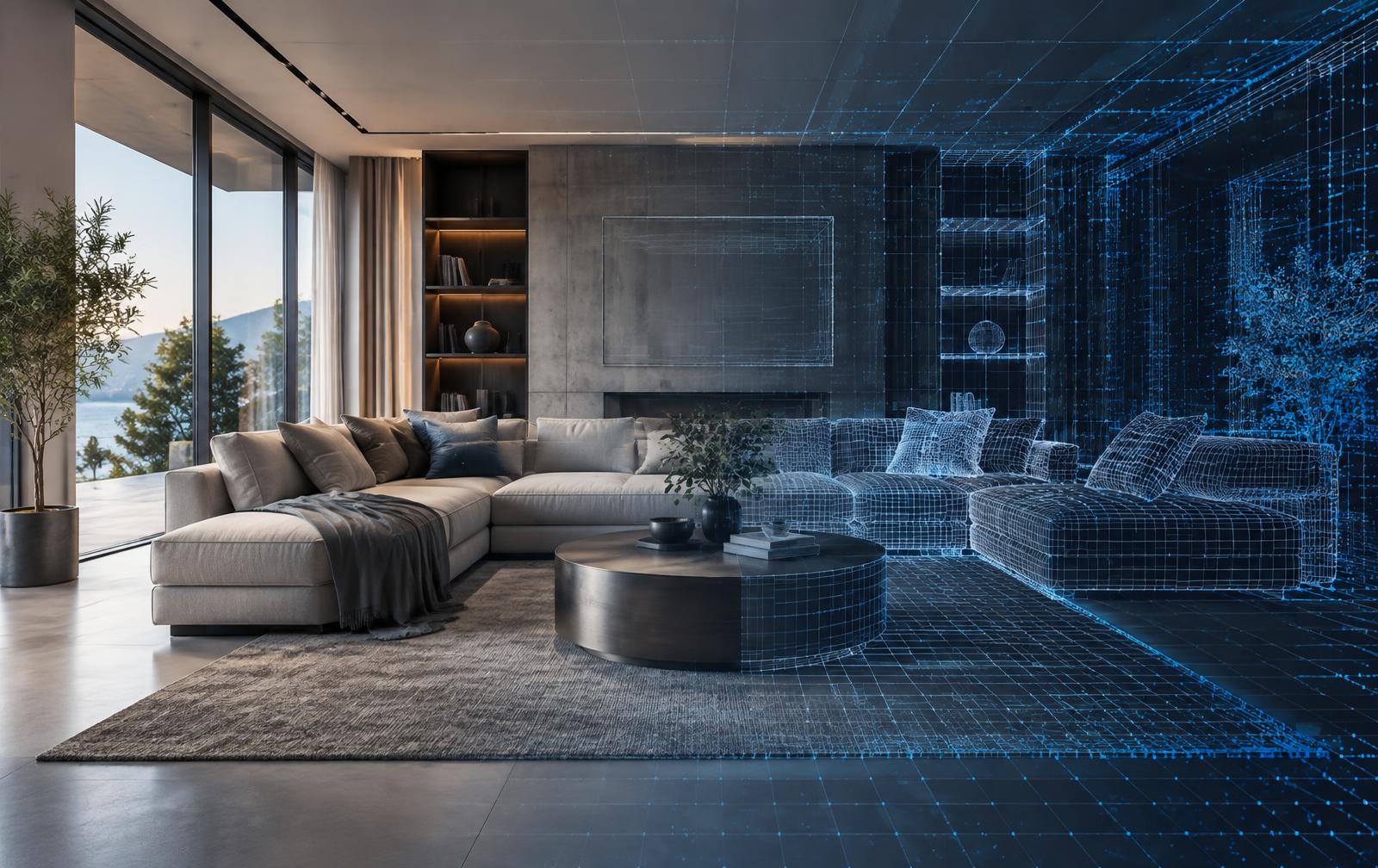
Environment intelligence
Your space. A testable model.
Environment layer
- 01
Capture
LiDAR and RGB for facilities; phone sensors for homes.
- 02
Environment reconstruction
A precise 3D model of the space.
- 03
Semantic understanding
Machines, fixtures and paths, identified.
- 04
Simulation environment
A digital model for testing robot tasks and constraints.
Process analysis
Process flow mapping
How work moves through your space.
Task breakdown
Each job split into concrete steps.
Human vs. robot split
What robots handle; what stays human.
Robot analysis and matching
Robot analysis
Assess reach, mobility, payload, dexterity, reliability and safety limits.
Inputs
Tasks, space, capabilities, reliability, safety and simulation results.
Output
Compatible robots across manufacturers. Safety limits always override ranking.
Rehearse before reality
Simulation support: state-of-the-art robotics technology for testing tasks, movement and constraints.
Plan
Waypoints, approach poses, task sequence, and estimated completion.
Test
Reachability, collisions, constraints, and likely failure points.
Refine
Feed simulation results back into the task plan.
Prepare
Use rehearsal to inform deployment.
ROI modeling
Labor hours
Time spent on each task today.
Task volumes
How often the work happens.
Robot cost
Expected cost to acquire and run.
Payback
When the investment returns.
Task orchestration
Turn requests into missions: identify, plan, navigate, place, verify.
Robot adapters
- 01
SharedMotion Orchestrator
- 02
Canonical Mission Interface
- 03
Robot Adapter
- 04
OEM interfaces
- 05
Robot
Long-term vision
Describe the work. Robots arrive prepared, without purchasing a robot.
On-demand access through our upcoming marketplace.